Tag: insecurity

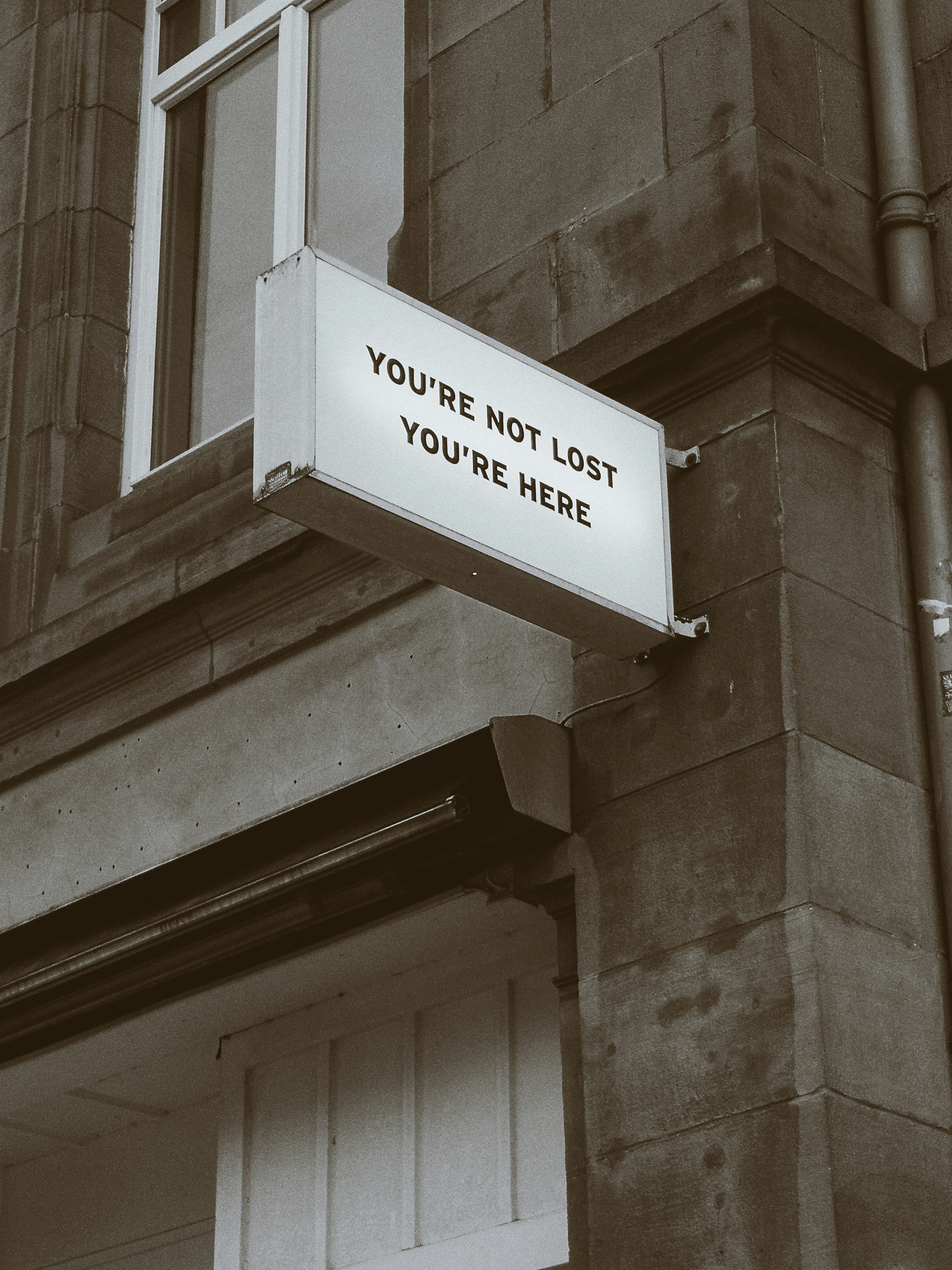
  • Follow the signs?

    In one of my favorite books, The Alchemist, one of the lessons is to “follow the signs.”

    But what happens when the signs are clear, but you don’t want to follow them?

    When the signs are blinking very clearly, bright red, to sunshine yellow, with enough lumens to make them impossible to ignore?

    When the recovery of being a people pleaser makes it difficult because you know in order to follow the signs, you are going to have to disappoint some people (gasp) and do the difficult work of actually engaging with emotions rather than just pretending that you are doing it for them.

    When you will have do it for you.

    Because the thing about signs is when you ignore them, danger happens. It takes you that much longer to get to your desitnation. You can damage your car/heart/soul.

    You ignore the signs at your own peril.

    Because the body, heart and soul remember. Understanding why Grandma had her “pressure up” and seeing why that cousin’s smile only ever reached her eyes when she was far away from the house.

    What happens when you can’t ignore the signs telling you to go left anymore because it means leaving behind. While the platitudes scream about “drop what’s not serving you” it is much harder to do when there are real people on the other side of the road less traveled.

    When you swallow the signpost and hope that it doesn’t come back up again. So you make keep smiling. But that signpost doesn’t digest well. It makes you uncomfortable. Everyone always ask you, what’s wrong and you say nothing. And now the alarms are going off and you smash them and even occassionally cut yourself on the shards, but the pain is minimal.

    What happens when you ignore the signs because of fear?

    What happens when you ignore the signs because they lead you to a life you never thought would happen for you? You have always had this vision of perfection and you realized life is messy and the idea of perfection is just a trap so you never have to try?

    And yet…

    You know you need to follow the signs. You ran of room to swallow, so you started burying in your backyard and are damned when they start to grow. Tall, overshadowing. Reminders that you can’t actually move off the path the universe. You trip over the overgrown roots because it is so overwhelming to continue to pretend that you aren’t walking underneath the shadows.

    All because you did not want to hurt people’s feelings the way they hurt yours. The way that they trampled over yours.

    The way that you wanted to feel like you were worthy just the one time of the same consideration.

    So you go shopping. At first you pick up up a small set of scissors. You start to weed the garden of the signs. You get clarity. You set a boundary. Instead of yes, you say “maybe we will see.” The signs glow in approval. You trade your scissors for garden shears. Nothing too crazy. People ask why do you have garden shears and tell you, you don’t need them. But your body remembers.

    You look at the small scar from where the shard cut you. Small but a memory.

    And you change the direction you walk in. Ever so slightly to the left. It’s a bit harder, but you realize that maybe it’s not so bad.

    And you trade your garden shears for a machete and all hell breaks loose. “Why???” people cry who used to have access to you. People who used you but never cared for you. But now you are prepared and the machete has cleared a path showing you the glow of what life looks like on the other side.

    And you upgrade again do a chainsaw. Now the work becomes effortless. Putting yourself first. Following your intuition. You no longer feel your pressure when you see that person’s name on your phone. You stopped making excuses.

    And you learned, follow the signs or perish at your peril.

  • Why Compliance Does Not Equal Love

    Why Compliance Does Not Equal Love

    com·pli·ance

    /kəmˈplīəns/

    noun

    1. 1.the action or fact of complying with a wish or command.

    Compliance is not love.

    Often, when the term “boundaries” is used in the common lexicon, what the person means is not boundaries, but compliance. They are upset that the person is not acting in accordance with his/her wishes.

    Parents get upset at children for not following their commands.

    Husbands are upset that their instructions weren’t met. Wives are frustrated that they have to repeat themselves over and over again and still there is no follow through on the action.

    Yet, compliance is not love.

    Just because someone follows orders does not represent love. We believe that if they only did the dishes, or folded the laundry, or turn over when tapped on the shoulder, it means they love us and more importantly, that they care for us.

    Years ago, Matthew Fray wrote a fantastic article about the difference between following through on an action out of love and following through on an action out of compliance.

    Because in life, we have to have a level of conformity to survive.

    In our closest relationships, it is difficult to remember, and more importantly understand, that the person is a distinct being from us even if we gave birth to them. We follow social norms, cues from friends and family about what is acceptable behavior. In fact, it has been studied quite extensively in social psychology of why everyday people are willing to inflict horrible atrocities on their fellow humans. There are times when we have to comply for our own safety – RUN, DUCK, DON’T TOUCH THE STOVE!!! The act of complying often can save our lives, certain exceptions notwithstanding.

    However in our most intimate relationships, we often want our partner, our children, our parents, our siblings to meld to our expectations. “If she loved me, she would…” “If he cared about me, he would…” “Why can’t my children…”

    But compliance is not love.

    How many people comply out of obligation, to avoid a fight, to not have to receive a lecture? Personally, several of my relationships that fell apart when I no longer complied out of obligation. These people, who claimed to love me, were upset when I no longer complied with whatever request they had of my time, my energy, and my actions. I often check myself to see if I am trying to get people to comply with my requests and frequently, I have to see that while I may want someone to take an action, they are not required to. I have to grant them the same autonomy I want for myself. This has meant taking a step back or voicing my wants.

    Compliance, conformity, confirmation are all rooted in the same need for control. This need for control, especially of women in heterosexual relationships, is the basis of all arguments for submission of women to men.

    For example, do you really want my opinion, or do you want confirmation that you are correct? Is that why you get upset when I disagree and offer a different opinion? If you come to trauma dump, did you get frustrated when I no longer allowed you to passively confirm your opinions and in fact offered my own take on the situation in which you could no longer center yourself as a victim?

    While the focus of these thoughts are on intimate relationships, the idea of compliance has far larger consequences for society at large, especially during this time.

    If you find yourself upset, frustrated, or angry because someone you love is not complying with your wishes ask yourself – do you want love or do you want control?

    Photo by Siora Photography on Unsplash

  • The Imposter Syndrome – A Personal Journey

    Recently, thanks to my own executive coach (because even the coach needs a coach. She’s wonderful), I’ve been reading “The Empress Has No Clothes” by Joyce Roche. It’s a wonderful book about how many times when we achieve success, we feel inadequate or like we didn’t deserve it. We feel that we aren’t deserving of such success and that we will be “found out.” I have spoken to many people and this is a phenomenon that transcends gender or race. It’s a problem not just applicable to corporate America. It’s that feeling that when we meet our graduate school classmates and one founded some billion-dollar start-up and the other rescues bald eagles on the weekends that we are the charity admissions case. I have coached more than one women entering business school with a non-traditional background, i.e. not consulting or finance, who has minimized her efforts. I have spoken to young men who feel they aren’t good enough despite evidence to the contrary.

    In Joyce’s book, she talks about the syndrome as a need to work ever harder and prove your value. I have the syndrome, but in some ways I did the opposite. I knew I didn’t belong and set myself up for failure. I self-sabotaged and always waited for the other shoe to drop. I would leave assignments have finished, or procrastinate, or just do things to so that expectations would be lowered. When people spoke of my talent, I didn’t believe them. Deep down inside, I didn’t feel I deserved what I had, so externally I made myself look like what my internal felt.

    I can remember very vividly when I received my last job. The EVP was extremely excited for me to join and spoke very highly of me. Yet, inside I didn’t believe that I was capable or worthy. I could name half a dozen people who would have the drive and the ability to succeed. My first thought was not “Heck yeah you want me on your team because I’m amazing,” but it was “Darn, what if I completely fail at this? I have no idea what I am doing.”

    This syndrome is different than insecurity. The hard part is that we know we are talented. We just believe we aren’t “good enough” or just aren’t as talented as the next person. We believe, despite all the external evidence to the contrary, that we are fraudsters, waiting until someone calls us out for having no clothes on.

    There is no singularly way to let go of the feeling. In her book, several of the essays take a multitude of approaches. Some turn to yoga, some have an epiphany, some turn to therapy. For me, here’s what work. The first step in overcoming the syndrome is to admit that you have those feelings. Share them. Find people, your alma mater, a networking group. Meet with them regularly. Discuss your feelings. Journal (blog like I am) but find a safe way to discuss it.

    The second step is to figure out a plan to fight it. Every case is different, but work with someone to create a plan. Create steps that you can measure, that are small.

    The third step is the hardest – list out every single accomplishment you have had over the last five, 10, lifetime. List out all of the wonderful things people have said about you. Keep it in a book. Write it down. Make it count. Realize that you did all of these things because of the talents you possess. Make a dream board.

    Additionally, there are several very good articles including this wonderful list by Joyce herself – http://shriverreport.org/10-ways-to-overcome-impostor-syndrome-joyce-roche/

    So what about me? I wish I could say that things changed suddenly, but like everyone else it is a journey. But I can tell that they have changed and that feels better than having no clothes.